

Root Removal in Westminster, CO
Clear tree roots from your Westminster sewer line fast. Local plumbers scope, cut, and flush roots the same day..
In Westminster, clay soil and aging pipes make root clogs common. Our crew at The Drain Cleaning Company holds Colorado plumbing license MP.03000945, and we clear sewer roots all over town. This page covers root cutting, hydro jetting, root barriers, and stopping repeat clogs.
Most lines get scoped and cleared in one visit. We are licensed plumbers. So we fix the cause of the clog, not just the symptom.
Front Range bentonite clay swells up to 20% by volume each wet season. That swelling pries open old pipe joints. Roots slip right inside.
What Is the Best Way to Remove Tree Roots From a Sewer Line in Westminster, CO?
Camera scoping plus mechanical cutting or jetting works best to clear tree roots from a Westminster sewer line. This clears the root mass and the pipe wall in one visit. We pick the method based on root size, pipe material, and local hard water buildup.
A camera scope locates the exact joint where roots got in.
A root saw or jetter cuts and flushes the root mass.
A descaling pass clears mineral buildup, so roots can't catch as fast.
Signs You Have a Root Problem in Your Pipes
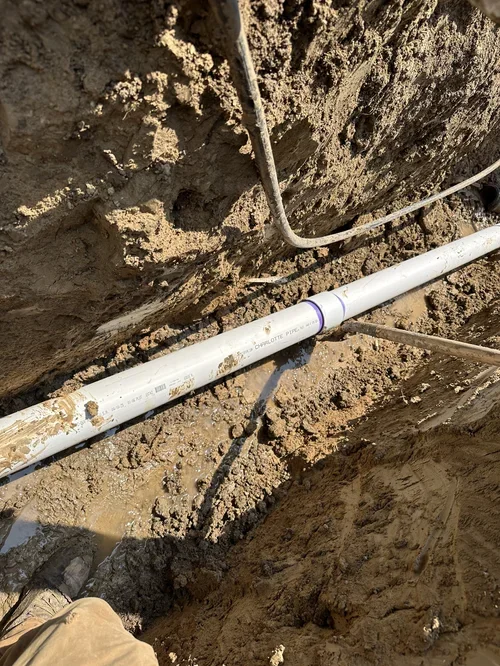
Tree roots search for water day and night. They slip into your sewer line through tiny cracks or gaps in old joints. Once inside, roots grow into thick mats that block the flow.
Homes with mature trees near older clay or orangeburg pipes face the highest risk in Westminster. Clearing roots early stops a full backup before it reaches your house.
Many Westminster root calls trace back to a leaking water main near the joint, not just nearby tree growth. One thing we see constantly on Westminster calls: a root mass at one joint, not spread evenly, often points to a leak nearby.
We check the yard for a soggy patch close to that joint. The leak might be feeding the roots, not the tree.
Westminster's Clay Soil and Older Pipes Make Root Problems Worse
Front Range soil holds bentonite and montmorillonite clay. This clay swells when wet and shrinks when dry, year after year. That constant movement cracks old pipe joints open.
Historic Westminster, Olde Town, and the older Trendwood section still have mid-century clay tile or orangeburg pipes. Many sit under mature cottonwoods and silver maples. Knowing your pipe material and soil type helps a plumber pick the right removal method.
Newer neighborhoods like Walnut Creek and The Ranch run PVC laterals. They rarely see root trouble unless the line sits near an old drainage easement.
What homeowners don't realize is that orangeburg pipe breaks apart in layers and goes oval over time. A tech may find a crushed, oblong pipe wall right where the roots are, not root intrusion alone.
Signs You Need Root Removal Before a Sewer Backup
Slow drains, gurgling toilets, and sewer smells outside often mean roots are narrowing your line. Pay close attention if you have mature trees nearby. Pay attention too if a patio or addition was built after the original house.
Catching roots early avoids a full backup inside your home. Some Westminster laterals sit shallow, just 30 to 36 inches deep instead of the standard 48. That's often true under later additions.
Most of the time when this happens near a patio or addition, the depth matters as much as the tree. Check pipe depth first before you blame the tree. Frost heave on a shallow line shifts joints the same way clay swelling does.
How Professional Root Removal Works in Westminster
First, we scope your line with a camera to find the roots. Then we cut them out using a mechanical auger or a hydro jetter.
Westminster's hard water runs 100 to 135 parts per million. That hard water often cements root mats into a solid, calcified plug instead of loose debris. A jetter with a descaling head clears mineral buildup along with the roots, and that gives you a fix that lasts longer.
A standard spinning root head can punch through that calcified plug. But it can leave a scale ring behind that catches the next root.
We run a chain knife or descaling jetter pass first on any line that's been slow for months. Skipping that step is why a clean-looking cut can clog again within a year.
What to Expect After Your Root Removal Service
Most lines flow clearly right after we cut the roots out. Roots can still return if the entry point isn't sealed.
Older sections with clay tile pipe often need repeat visits unless we repair or line the joint. A follow-up camera check confirms the line is truly clear, not just punched through.
Seasonal clay swelling can reopen the same joint by spring, even after a clean fall service. A line cabled clean in October can clog again by May. That's not bad work. It's the clay soil reopening the same joint it closed over winter.
Frequently Asked Questions
Is it safe to remove tree roots from a sewer line yourself?
No, DIY root removal often pushes roots deeper into the pipe. Store-bought foaming treatments rarely clear the line and can stress older clay pipe. A camera scope shows the real problem before any cutting starts.
What removes tree roots from a sewer line best?
Mechanical cutting or hydro jetting removes roots best in most Westminster lines. A root saw cuts through the mass, and a jetter flushes debris out. Hard water buildup means a descaling pass often comes first.
Do home remedies like baking soda or copper sulfate dissolve roots?
No, these remedies rarely dissolve roots fully in hard water areas. Westminster's mineral-heavy water causes copper sulfate residue to harden faster than in many cities. Roots often return within a year after a foaming treatment alone.
How do plumbers remove a deep root from a clogged lateral?
Plumbers find the root's exact depth with a camera scope first. A root saw or jetter head built for thick mats clears the line. Deep roots near calcified buildup may need a descaling pass too.
Is root removal covered by homeowner's insurance in Westminster?
Coverage varies depending on your policy. Sudden damage is more often covered than gradual root growth. We recommend checking with your provider and can provide documentation to support a claim if needed.
Why do roots come back after a line is cleared?
Roots return when the entry joint isn't sealed or repaired. Westminster's clay soil swells and shrinks with the seasons, reopening old joints. A line cut clean in fall can clog again by spring without a joint repair.