


Toilet Drain Cleaning in Westminster, CO
Professional toilet drain cleaning for homes across Westminster, CO. Same-day visits clear clogs, restore full flow, and check for the real cause before you're stuck calling again.
How Do Plumbers Clear a Clogged Toilet Drain in Westminster, CO?
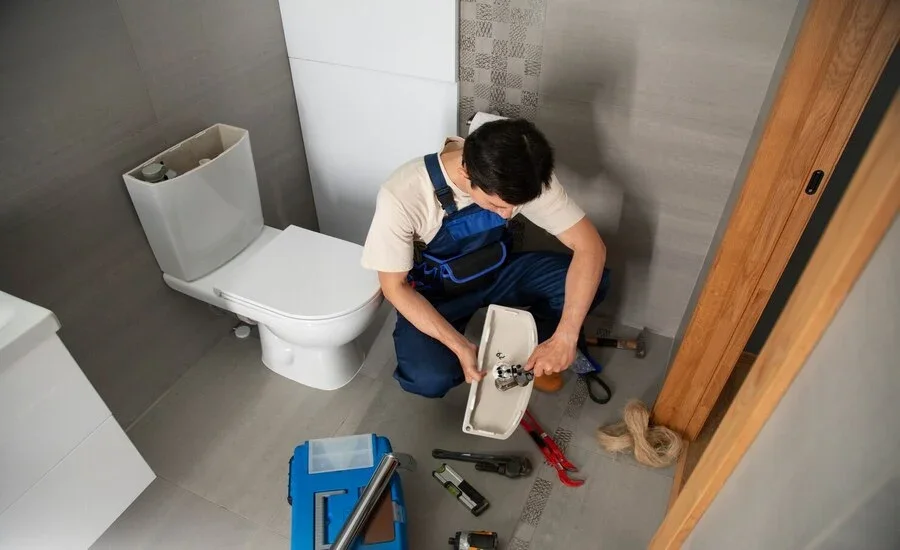
Here's how we clear a clogged toilet drain on a typical Westminster call:
Check the flush strength and look under the rim for mineral scale.
Pull the toilet instead of cabling from the bowl on older homes.
Run a closet auger through the flange for a direct line down.
Clear the blockage and test with multiple flushes.
Inspect the wax ring and flange for movement or damage.
Camera-scope the line if the clog has happened more than once.
Reset the toilet and confirm full drainage before we leave.
Westminster plumbers camera-scope repeat clogs first. Aging Orangeburg and cast iron lines cause more repeat problems than loose debris ever does.
What Toilet Drain Cleaning Involves
Toilet drain cleaning means clearing the trap, the closet bend, and the short line right below the fixture. That's where most clogs actually sit. On older Westminster homes, we often pull the toilet instead of running a cable through the bowl. It gives us a straight shot down the flange instead of fighting a tight turn.
Homes built before 1970 usually have cast iron closet bends, and those bends turn tighter than the PVC used today. A standard bowl auger can slide right past debris sitting just beyond that bend. Pulling the toilet clears the real blockage the first time, so you're not paying for a second visit.
Common Causes of Toilet Clogs in Westminster Homes
What causes a toilet clog depends on where you live in Westminster and how old your pipes are. In Historic Olde Town and South Westminster, cast iron and Orangeburg laterals are common. Many have outlived their expected service life. Newer homes in Legacy Ridge and Bradburn run PVC or ABS pipe instead.
Clogs there are usually wipes or foreign objects, not pipe failure. Knowing which one you're dealing with saves you money. If your home predates 1970, we assume cast iron or Orangeburg until we prove otherwise. If it was built in 2000 or later, we check for wipes and foreign objects first.
When Repeat Clogs Signal a Bigger Problem
A toilet that clogs more than once in a few months usually isn't a toilet problem. It's often a sign of trouble further down the line. Root intrusion at cast iron and Orangeburg joints shows up often in Westminster's older neighborhoods. Aging laterals near mature trees are frequent trouble spots across the city.
If your toilet backs up whenever you run the washing machine, that's rarely a coincidence. What homeowners don't realize is the toilet is usually just the lowest fixture in the house. A mainline problem shows up there first. We'd rather run a camera than cable the same line five times.
Why Weak Flushes Aren't Always Clogs
A weak flush with no real blockage is usually mineral scale, not a clog. Westminster's water comes from Standley Lake, and it runs moderately hard most of the year. That mineral content builds up inside the trap-way over time. Descaling restores flush power without running a cable through a toilet that isn't clogged.
The hardness typically runs 8 to 14 grains per gallon. One thing we see constantly on Westminster calls is homeowners cabling a toilet that just needs descaling. Check under the rim with a mirror or flashlight first. If you see white or gray crusting, that's scale, and cabling it only wears down the porcelain glaze.
Winter Toilet Drain Problems in Westminster
A toilet that won't drain in the middle of winter isn't always clogged. Sometimes it's frozen. Bathrooms on exterior walls or over an unheated garage are the most exposed. This shows up most in 1960s and '70s split-level homes west of Federal Boulevard.
Westminster's frost line runs about 36 inches deep, and an uninsulated stud bay can chill a drain line fast. Forcing a cable through a frozen line is risky. It can crack porcelain or split a frozen PVC pipe. So we rule out a frozen trap before we run any cable in winter.
What to Expect During a Service Call
Every visit starts the same way: we diagnose the problem before any tool touches your drain. If we pull the toilet, we check the wax ring and the flange while it's off. Westminster sits on expansive clay soil, and that soil shifts with moisture.
Over time, that movement can knock a closet flange out of position. Most of the time when this happens, the toilet rocks slightly, even after a routine clog is cleared. We flag that during the first visit, not after you call us back.
Frequently asked Questions
-
No — avoid chemical cleaners in toilets. They sit in the bowl instead of the line and won't touch scale or root causes. A closet auger clears the actual blockage safely.
-
Rarely, for a real blockage. Hot water can help with a frozen trap in winter, but a solid clog still needs a proper closet auger.
-
Usually a lateral line issue, not the toilet itself. Repeat clogs in older Westminster homes often trace back to root intrusion or an aging Orangeburg line.
-
Mineral scale is the likely cause. Westminster's harder water builds up in the trap-way and jet holes, cutting flush power over time.
-
No, but they look identical. A frozen trap in an exterior-wall bathroom stops drainage the same way a clog does, and needs thawing, not cabling.
-
Frequency is the tell. A one-time clog is usually debris. Clogs returning within months point to a lateral or root problem worth a camera inspection.